
Travel Report: 35th European Meeting on Hypertension and Cardiovascular Protection (2026)
Grace Whelan
I attended the European Society of Hypertension (ESH) Annual Meeting, which brought together international researchers and clinicians working across hypertension, cardiovascular disease and cardiometabolic medicine. The meeting provided an excellent opportunity to learn about recent advances in basic, translational and clinical research, while also facilitating networking and discussion with experts from a broad range of disciplines.
E-poster presentation
As part of the scientific programme, I presented my research during the E-poster session entitled: “Nicotinamide adenine dinucleotide phosphate oxidase 1 and 4-associated oxidative stress and endothelial dysfunction induced by anti-cancer therapies.” This was my first time participating in an E-poster session. I gave a 3-minute overview of my work and a further 2 minutes of questions, presenting a graphical abstract which summarized the principal findings and translational impact of my work and my poster was available to delegates on the conference app.
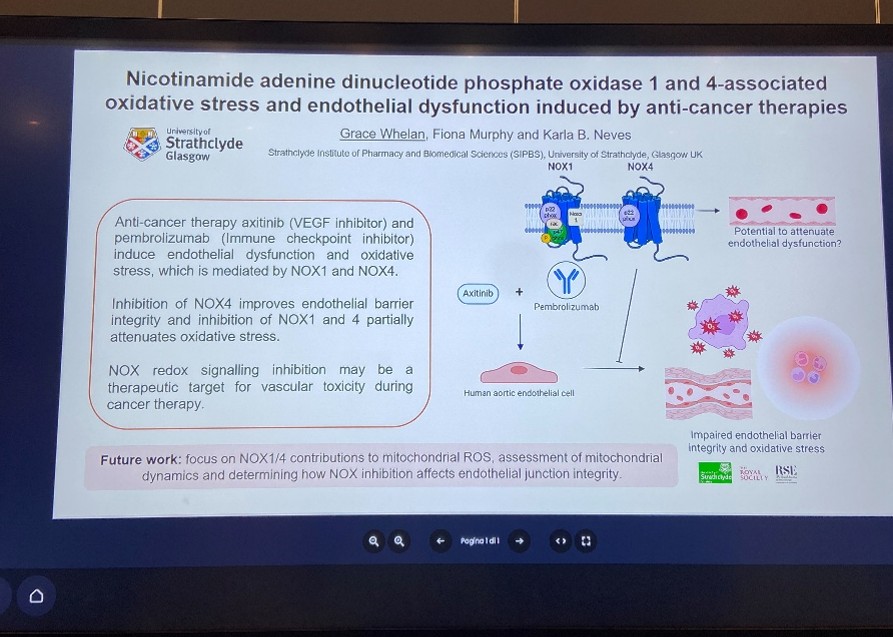
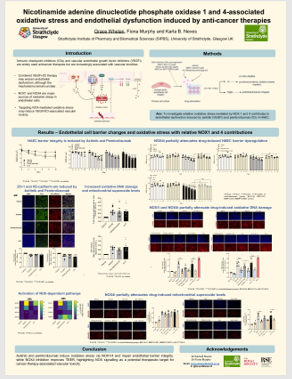
Presenting at this stage of my PhD was particularly valuable, as my project is now in a mature stage with robust datasets and clearly defined mechanistic conclusions. The conference provided an opportunity to showcase these findings to an international audience while receiving constructive feedback. Discussions with researchers highlighted the importance of further investigating mitochondrial bioenergetics and mitochondrial ROS signalling, helping me prioritise the final experiments for my PhD and identify opportunities to strengthen the translational impact of the project.
Scientific Value of the Meeting
The interdisciplinary nature of cardiovascular oncology was strongly reflected throughout the conference programme, bringing together basic scientists, translational researchers, clinicians and industry representatives working across cardiovascular medicine and hypertension research. The meeting theme, "Innovations in Cardiometabolic Management," closely aligned with my research interests and reinforced the importance of understanding cardiovascular complications arising from cancer therapies within a broader clinical context and emphasised the importance of considering crosstalk between organs. A key focus of the conference was the association of renal and vascular function and how renal markers may inform on vascular function and vice versa and the importance of collaboration and close management between cardiologists and endocrinologists.
A particularly valuable aspect of the meeting was the opportunity to listen to clinicians and physicians whose perspectives differ from those typically encountered in laboratory-focused environments. Much of my previous conference experience has been at national meetings with fewer opportunities for interaction with clinical specialists, making these presentations which focused on clinical data and patient case studies especially beneficial. This helped highlight the clinical significance of endothelial dysfunction in cardiovascular-oncology and generated useful ideas regarding future translational studies and potential biomarkers relevant to patient care.
My favourite sessions
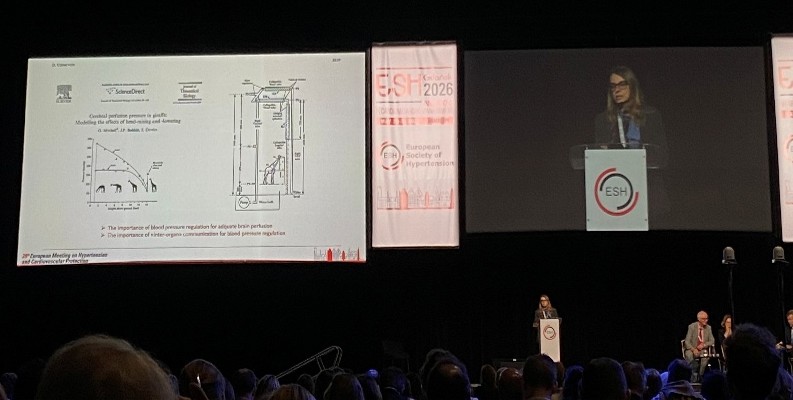
The sessions which I found most interesting at ESH2026 were: (1) The Immune System in Hypertension: Driver, Amplifier, or Bystander? and (2) The mysteries of the microbiome. These sessions highlighted the role of the immune system and gut microbiota in cardiovascular disease and resonated with my previous background in immunology. The session which was the most relevant for me was the vascular dysfunction and remodelling session, most notably the lecture by Prof Rhian Touyz ‘The vasculome in hypertension: oxidative stress to precision medicine’, where she discussed the evolution of her work on the NOX enzymes and redox biology in cardiovascular research.
Contribution to the BSCR Community
Attendance at ESH aligns closely with the objectives of the BSCR, particularly its commitment to promoting scientific exchange, collaboration and the development of early-career researchers. By engaging with researchers and clinicians from across Europe, America, Oceania and Asia, I gained exposure to new methodologies, perspectives and emerging research directions that extend beyond my immediate research environment.
The knowledge and insights gained from the meeting will be shared with colleagues within my research group and through future discussions and presentations within the wider UK cardiovascular research community. These interactions also contribute to strengthening links between UK-based cardiovascular researchers and the broader European cardiovascular community, supporting collaborative approaches across basic, translational and clinical science.
For me personally, attending ESH during the final year of my PhD has been an important step in my development as an early-career cardiovascular researcher. The experience has strengthened my scientific communication skills, broadened my understanding of translational cardiovascular-oncology research and reinforced my ambition to pursue a research career focused on cardiovascular science and therapeutic innovation.
Gdansk
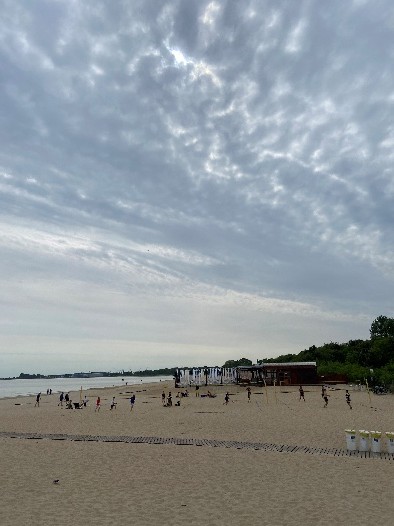
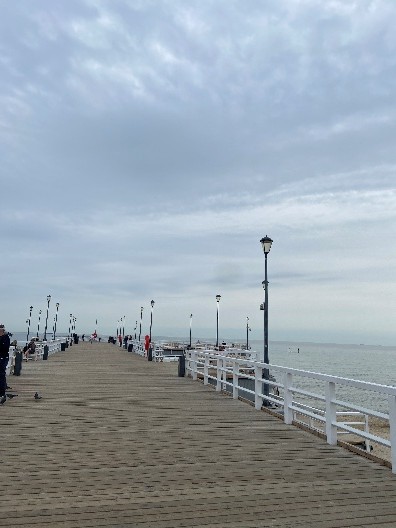
Outside the conference, I also had the chance to explore Old Town Gdansk and the Beach/Pier!
Thanks to the BSCR
Finally, I want to thank the BSCR for their travel award, which helped fund my participation in this conference.